


Choosing the right walking stick is an essential step in maintaining mobility, safety, and independence—especially for older adults or those living with reduced mobility. At Access Stairlifts, we’re passionate about helping people move freely and confidently, whether through the right mobility aids or by installing stairlifts in their homes.
In this guide, we’ll walk you through how to choose the ideal walking stick for your needs. From selecting the correct height to understanding the best materials and types available, we’re here to help you make an informed and safe decision.
Why Choosing the Right Walking Stick Matters
Using the wrong walking stick—whether it’s too tall, too short, or not designed for your specific needs—can negatively affect your posture, cause joint discomfort, and increase the risk of trips and falls.
On the other hand, a properly chosen walking stick can:
-
Improve balance and stability
-
Reduce strain on joints
-
Encourage better posture
-
Promote confidence and independence
How to Choose the Correct Walking Stick Height
Getting the height right is crucial for comfort and safety. Here’s how to measure:
-
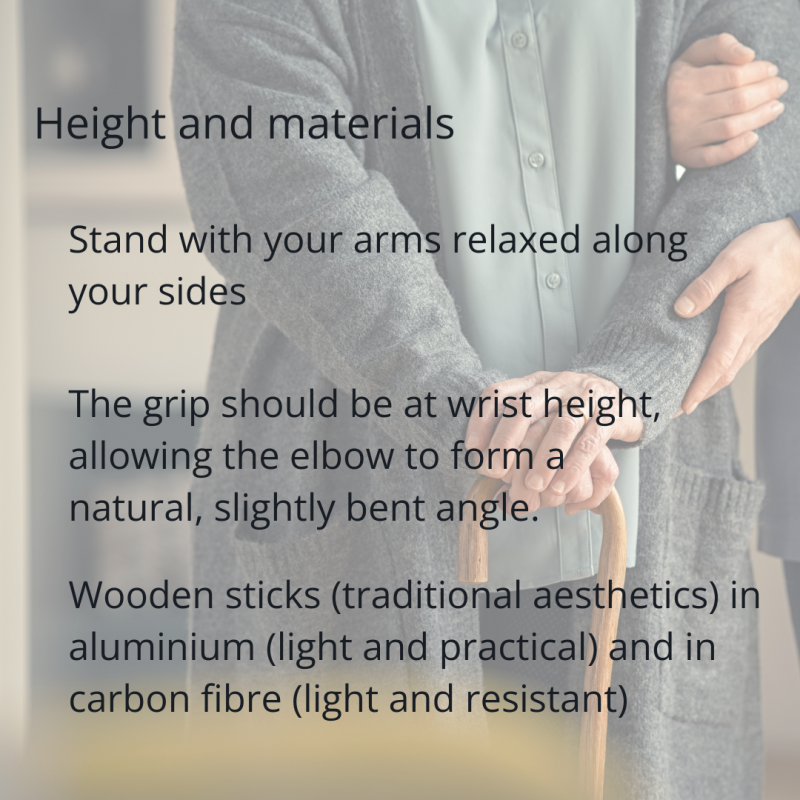
Stand upright with your arms relaxed by your sides.
-
The handle of the walking stick should line up with the crease of your wrist.
-
When you hold the stick, your elbow should be slightly bent—about 15 to 20 degrees.
Adjustable walking sticks are a great option for easily fine-tuning the height to your needs.
Best Materials for Walking Sticks
Walking sticks come in a range of materials, each offering different benefits:
-
Wooden walking sticks: Classic, strong, and visually appealing. Ideal for those who prefer a traditional look.
-
Aluminium walking sticks: Lightweight and durable, perfect for daily use and travel.
-
Carbon fibre walking sticks: Ultra-light and exceptionally strong—ideal for users looking for a premium solution.

Different Types of Walking Sticks
There is no one-size-fits-all. The best walking stick depends on your level of mobility and balance.
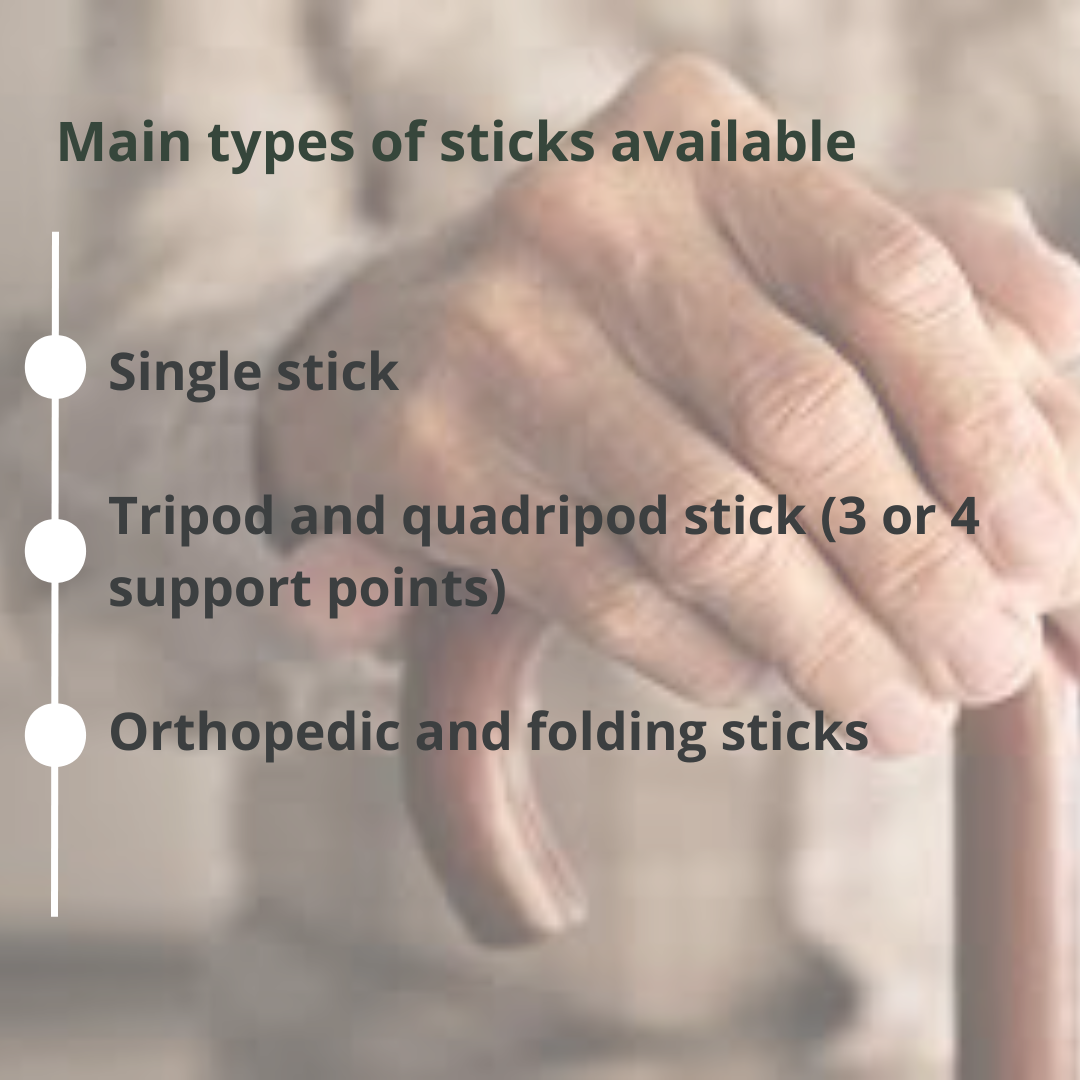
Here are the main types:
-
Standard Canes: Ideal for users needing light support.
-
Quad Canes (Four Legs): Offer maximum stability—recommended for users with balance issues or more severe mobility challenges.
-
Tripod Canes (Three Legs): Provide more support than standard canes but are lighter than quad canes.
-
Orthopaedic Canes: Designed for medical or rehabilitation needs.
-
Folding Canes: Great for those who travel or need a compact, portable option.
Handles and Tips: Small Details, Big Impact
The handle of the walking stick should feel comfortable and secure in your hand. Common handle types include:
-
Ergonomic: Contoured for comfort during prolonged use
-
T-Shape or Curved: Simple and traditional, ideal for many users
-
Anatomical: Shaped to support the natural curve of the hand
Rubber tips provide grip and shock absorption. Check regularly for wear, especially if you use the stick on outdoor or uneven surfaces.
Walking Stick Maintenance Tips
To keep your stick safe and functional:
-
Inspect the rubber tip regularly and replace it when worn
-
Check adjustable models for secure locking and height accuracy
-
Wipe the stick with a damp cloth—avoid harsh cleaning products
Access Stairlifts: Supporting Mobility at Every Step
At Access Stairlifts, we know that choosing the right mobility aid can be life-changing. Whether you’re looking for the perfect walking stick or exploring options like stairlifts, home lifts, or bathroom adaptations, we’re here to help.
Our friendly team offers expert advice and tailored solutions across Ireland to help you or your loved ones stay safe and independent at home.
Need guidance on walking aids or stairlifts?
Contact Access Stairlifts today for a free, no-obligation consultation.